Every home is unique, and creating a beautiful yet functional space is no longer just about buying furniture off the shelf. Through whole-house customization, families can unify spatial layout, storage solutions, and furniture design to achieve a more efficient and comfortable living experience. This article will guide you through every step of whole-house customization, from initial planning to final installation, offering practical advice and key considerations.
Start with Your Needs
Every household has different living habits, so whole-house customization should be tailored accordingly.
Initial Consultation & Floor Plan Analysis
Discuss daily needs with the designer, such as cooking frequency in the kitchen, clothing storage habits in the bedroom, and living room usage.
Upload or measure the floor plan and provide accurate dimensions.
The designer offers preliminary space optimization suggestions and a budget estimate.
Step | Content | Outcome |
Needs collection | Daily habits, storage needs | Designer fully understands requirements |
Space analysis | Measure walls, corners, lighting | Identify optimization points |
Preliminary budget | Estimate material & design costs | Understand costs upfront |
Action tip: Document your household routines and special needs to ensure the design is actionable.
Key Functional Area Design
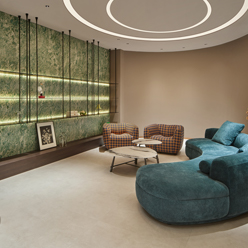
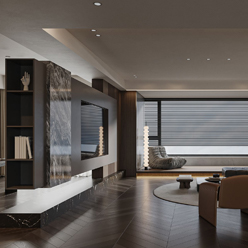
Living room: Integrated planning for TV units, bookcases, and storage cabinets to avoid wasted space.

Whole-House Customization: Living Room Rendering
Kitchen: Design wall cabinet heights and corner drawers to improve operational convenience.

Whole-House Custom Kitchen Rendering
Bedroom: Optimize wardrobe internal partitions and drawer layouts for better storage.

Whole-House Customization: Bedroom Design Rendering
Practical tip: Make a list of items before planning to determine storage needs for each area.
Note: Small apartments should pay special attention to storage. For example, a "wall-door integrated" design can combine a hidden door with a storage wall to create extra concealed compartments—such details should be clarified during the functional planning phase.
Materials & Style
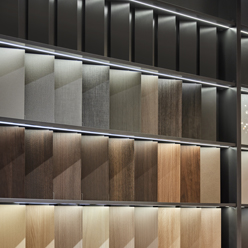
Material Selection
Panels: Moisture-resistant MDF, solid wood, or eco-friendly composite materials meeting standards.
Hardware fittings: Wear-resistant slides, silent hinges.
Surface finishes: Matte, glossy, or textured.
Style Consistency
Furniture colors should coordinate with walls and flooring.
Unify heights and proportions for a neat visual appearance.
Consistent hardware design enhances overall aesthetics.
Practical tip: When confirming materials, try to view physical samples or obtain swatches to match your actual renovation. Brands like Landbond Corten, which hold green home product certifications, offer panels with reassuring low-formaldehyde standards.
3D Design & Plan Confirmation
Advantages of Visualized Design
View furniture layout and spatial flow intuitively through 3D models.
Ensure doors, drawers, and walkways are unobstructed.
Adjust colors and materials to optimize the design.
Practical tip: Check door and drawer clearance to ensure everyday usability. Landbond Corten offers a VR showroom where you can experience the design in a virtual space.
Factory Production
Precision and quality control are critical in the production phase. The typical production process for whole-house customization includes:
Phase | Key Operations |
Panel cutting | Precisely cut according to design dimensions |
Pre-assembly | Modular pre-assembly for easier transport |
Quality inspection | Check dimensions, surfaces, hardware |
Packaging & shipping | Safely deliver to site |
Action tip: Confirm that the supplier provides material environmental certifications and quality inspection reports.
Installation & Final Delivery
Installation Process
The installation team re-measures the space to ensure dimensional accuracy.
Assemble cabinets, wardrobes, and storage systems on site.
Adjust doors, drawers, and hardware for smooth operation.
Acceptance & Maintenance
Inspect surfaces, gaps, and hardware.
Test drawers, doors, and all functions.
Receive daily care guidelines and warranty service.
Action tip: Take photos after installation for future maintenance or warranty claims.
First-Timer's Whole-House Customization Checklist
Task | Recommendation |
Budget | Include design, materials, and installation costs |
Designer selection | Review portfolios, testimonials, experience |
Material confirmation | Ensure eco-friendliness and durability |
Space planning | Optimize corners, walls, and storage |
Installation supervision | Use a professional team |
Final acceptance | Document issues with photos, verify functionality |
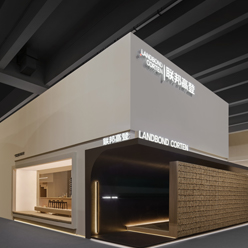
Why Choose Landbond Corten?
If you're considering whole-house customization, Landbond Corten is a brand worth exploring:
Joint-venture background, stable and reliable: A Sino-New Zealand joint venture established in 2004, with a manufacturing base in Nanhai, Foshan, Guangdong.
Fast delivery, no project delays: Average of just 15 days from design confirmation to installation, far faster than the industry average.
Strict quality control, eco-friendly peace of mind: Complete quality inspection system from raw materials to finished products, holding “Specialized and Sophisticated” enterprise certification and green home product certification.
Full service, worry-free after-sales: Professional design team, in-house installation crew, and over 300 stores across 26 provinces nationwide.
If you'd like to learn more about Landbond Corten, click here to contact customer service for preliminary advice tailored to your floor plan.
Summary
Whole-house customization is not just a combination of furniture—it is a systematic planning and aesthetic design of the entire living space. Through whole-house customization, every family can achieve efficient storage, unified style, and convenient living. From analyzing lifestyle needs and functional planning to design confirmation, factory production, and installation, every step serves to create a comfortable, practical, and beautiful home environment.
FAQ
Q1: How long does whole-house customization take?
A: Typically, the entire process from consultation to installation takes about 3–8 weeks, but Landbond Corten can compress it to 15 days.
Q2: Can custom furniture be mixed with existing ready-made pieces?
A: Yes. For example, custom cabinets can be paired with an existing sofa or dining table for greater flexibility and cost savings.
Q3: Are the materials eco-friendly?
A: Reputable suppliers provide environmental certifications, using low-formaldehyde panels and hardware that meet international standards. Landbond Corten holds green home product certification, so you can choose with confidence.