In an era overwhelmed by information and pressure, a good night's sleep has become one of the most elusive luxuries for modern urban dwellers. We meticulously decorate our bedrooms and invest in expensive mattresses, yet often overlook a fundamental truth: sleep quality is first defined by the environment. Light, color, texture, scent… these silent environmental cues continuously send signals of "safety" or "alarm" to our nervous systems.
Creating a Healing Bedroom is far from an empty aesthetic slogan—it is a systematic design grounded in ergonomics, environmental psychology, and neuroscience. As a full-case customization brand deeply committed to healthy living environments, Landbond Corten believes that the core of a truly sleep-promoting bedroom lies in "actively reducing stimuli" and "passively providing comfort." The two cornerstones for achieving this are the precise synergy of a low-saturation color system and a skin-friendly material system.
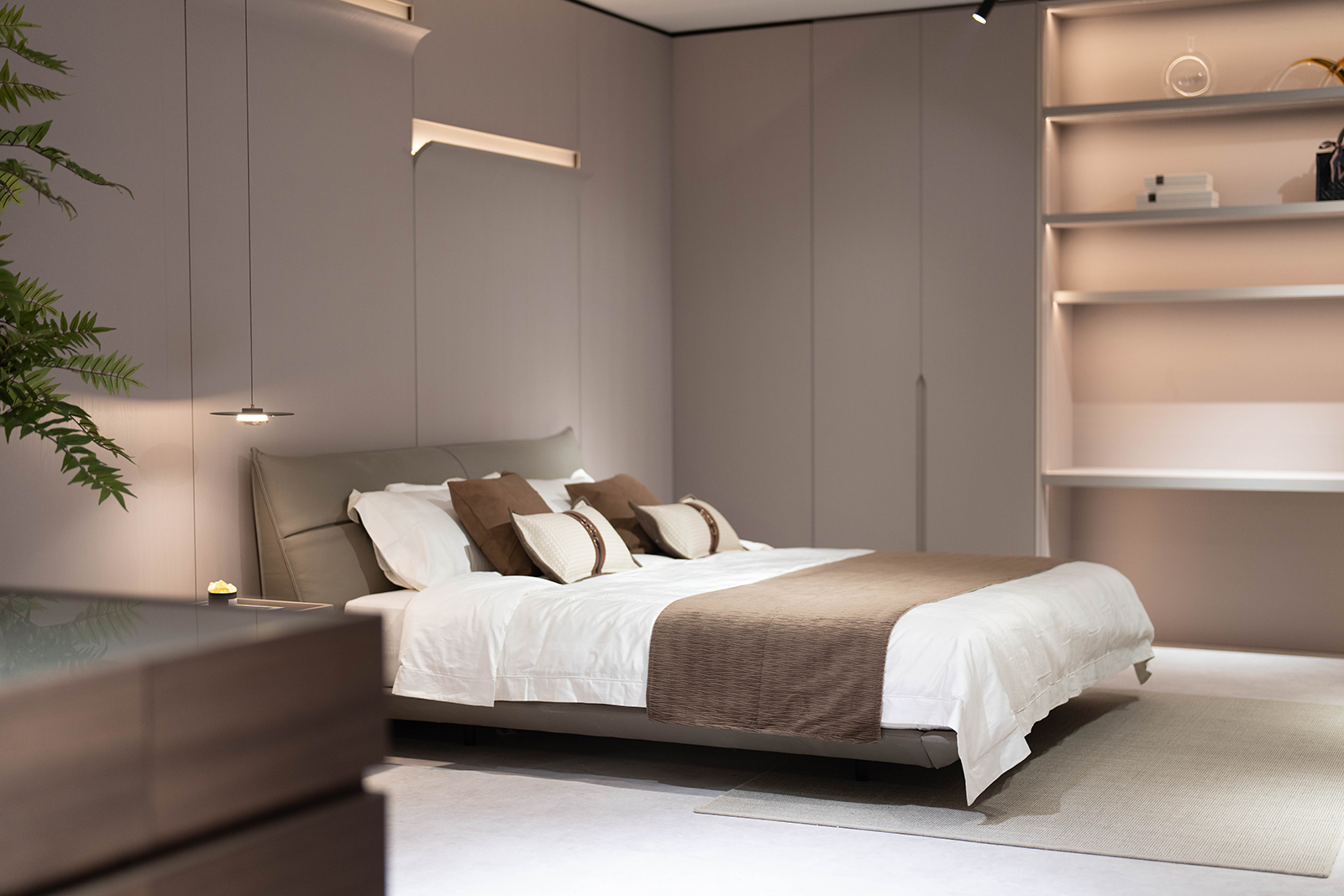
Chapter 1: The Soothing Prescription of Color: How Low Saturation "Calms" the Brain
Color is the language of light, directly affecting our limbic system—the core region of the brain responsible for emotions and memory. High-saturation, high-contrast colors intensely stimulate the optic nerves, triggering subconscious excitement, tension, or even anxiety, leading to increased cortisol levels, which contradicts the relaxation required for sleep.
The "healing logic" of low-saturation colors lies in:
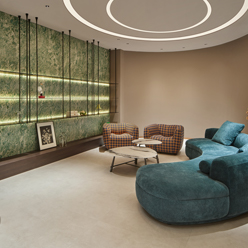
1. Reducing Visual Noise: Soft hues like muted grays, misty blues, sandy apricots, and light oat tones act as a "soft-focus filter" for vision, significantly reducing the burden of information processing and allowing the eyes and brain to relax.
2. Evoking Associations of Safety: These colors often originate from nature (earth, sand, morning mist, plants), subconsciously evoking memories of stability, peace, and shelter, activating the parasympathetic nervous system and guiding the body into "rest and digest" mode.
3. Providing an Emotional Container: A low-color-temperature, low-purity background better accommodates residual daytime emotions rather than clashing with them, creating a psychological space with emotional buffering capabilities.
Landbond Corten's Practice: We go beyond simple "color swatch selection" to establish a "Bedroom Color Dynamics" system. Designers not only consider single-wall colors but also coordinate the overall color temperature and reflective relationships of wardrobes, headboard backgrounds, woodwork, and soft furnishings under varying natural and artificial lighting throughout the day. By using specially formulated matte finishes and environmentally friendly paints, we ensure colors appear pure and soft, without irritating light reflections, crafting a unified and immersive soothing visual field from every perspective.
Chapter 2: The Comforting Ritual of Touch: How Skin-Friendly Materials Create a "Safe" Boundary
The skin is the body's largest sensory organ. The process of falling asleep is essentially the release of the body's guard, and touch is the most direct pathway to establishing a sense of security. Rough, cold, or sticky materials continuously send subtle discomfort signals, hindering relaxation.
The "sleep-promoting" effects of skin-friendly materials are evident in:
1. Temperature Regulation: Materials like wool blends, velvet, and high-quality knitted cotton offer excellent moisture absorption, breathability, and thermal buffering, helping maintain the optimal microclimate on the skin's surface and preventing nighttime awakenings due to overheating or chilling.
2. Tactile Feedback: Fine, soft textures with slight friction (such as micro-suede or supple leather) simulate the sensation of being embraced, stimulating skin pressure receptors, promoting the secretion of oxytocin (a hormone that alleviates stress and fosters intimacy), and providing deep comfort.
3. Acoustic Noise Reduction: Heavy curtains, carpets, and upholstered headboards not only offer tactile comfort but also effectively absorb nighttime noises, creating an acoustically quiet cocoon.
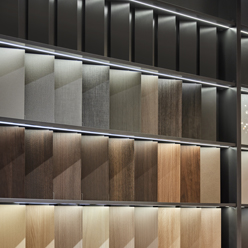
Landbond Corten's Practice: We have built a rigorously tested "Skin-Friendly Material Library." From the tactile matte paint finish on wardrobe doors to the fine velvet lining inside drawers; from the stain-resistant, antibacterial fabrics used in upholstered headboards to the natural rattan or wool mats on tatami platform surfaces—every interface that may come into contact with the body is evaluated comprehensively for texture, temperature regulation, durability, and ease of cleaning. We firmly believe that gentle attention to detail is an indispensable ritual for high-quality sleep.
Chapter 3: Systemic Healing: How Landbond Corten Integrates Science into Full-Case Customization
The excellence of a single element is insufficient to construct a healing space. The core strength of Landbond Corten lies in the systemic integration of color, materials, light, layout, and storage, providing a full-case solution from "environmental diagnosis to precise implementation."
1. In-Depth Needs-First Communication
2. Matrix Pairing of Colors and Materials
3. Customized Light Management Design
4. The Orderly Contribution of “Zero-Pressure” Storage
Conclusion: The Bedroom as a Gentle Prescription
True luxury lies in attaining complete restoration and nourishment within one's own space and time. A healing bedroom crafted by Landbond Corten is no longer just a room for sleeping—it becomes a "life support system" that actively participates in your health management.
It uses scientific colors to shield you from noise, envelops fatigue with skin-friendly textures, and soothes anxiety with systematic order. Here, every design element carries a clear mission: to guide you to let go faster, sink deeper, and rest more peacefully in that precious darkness and tranquility.
Choosing Landbond Corten means elevating the sleep environment into a worthwhile investment in your health. Let us start by creating a healing bedroom—relearning how to settle ourselves and welcoming every clear and composed dawn.